

Paul Michael
October 6, 2026
Free Amazon product research tools have become a lifeline for aspiring FBA sellers who want to discover winning products without upfront software costs. Many new merchants, including small businesses and solo entrepreneurs, rely on these resources to cut expenses while they scout for profitable niches. According to Amazon’s 2025 Small Business Empowerment Report, more than 60% of sales in Amazon’s store come from independent sellers, most of which are small and medium-sized businesses. U.S.-based independent sellers averaged more than $375,000 in annual sales in 2025, highlighting the scale of the opportunity in today’s market.
If you’re brand-new or simply looking to refine your strategy, you can simplify the process by learning about finding a product to sell on Amazon without guesswork. Below, we’ll discuss what makes free tools appealing and break down seven high-value options.
What Makes Free Tools Appealing for FBA Sellers?
Free product research tools provide vital insights into sales metrics, competition levels, and potential profit margins. They’re especially helpful when you’re on a tight budget or still testing the waters of the Amazon ecosystem. While many advanced features are locked behind paywalls, free versions still offer sales estimators, keyword data, and even limited historical trends.
However, these tools often come with usage caps or fewer data points. You might need multiple options if you want a broader perspective. For those seeking powerful free software for FBA, mixing and matching solutions is a practical way to maximize your research.
7 Best Free Amazon Product Research Tools for FBA Sellers in 2026
1. Analyzer.Tools
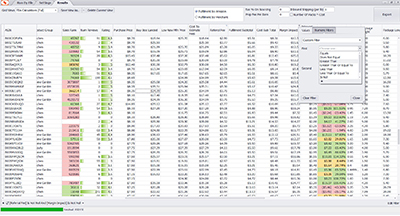
Analyzer.Tools stands out for its short-term pass options, allowing sellers to try extensive product analysis features without a long-term commitment. You can process large product lists, check potential profit, and identify FBA fees all in one place. Compared to Helium 10’s limited free version, Analyzer.Tools delivers broader data points right away and remains a top solution for in-depth insights.
2. Helium 10 (Free Plan)
Helium 10’s free plan includes restricted access to Black Box, which uses machine learning to help you spot popular niches. You also get limited usage of their Chrome extension, providing a snapshot of sales volume and competitor data. The current free plan includes five lifetime Black Box uses and limited Xray access, making it better suited to occasional research than high-volume daily use. Helium 10’s interface is beginner-friendly and pairs well with other free options if you want multiple data references.
3. Jungle Scout’s Free Sales Estimator
Jungle Scout offers a free sales estimator that calculates monthly unit sales based on Best Seller Rank and category. It’s straightforward and surprisingly accurate for a no-cost tool. However, it lacks advanced details like price history and in-depth keyword analytics. Compared to Analyzer.Tools, Jungle Scout’s estimator feels more minimal, but it’s useful if you just need quick sales checks.
4. AMZScout (Free Tools)
AMZScout offers a free trial with no credit card required, plus free tools such as an FBA Fees Calculator, Sales Estimator, and Stock Stats. During the trial you can search the Product Database, check niche scores with the PRO AI Extension, and review sales history and competitor data. AMZScout Skill + MCP also connects Claude and ChatGPT to live Amazon data for product validation and keyword research. Trial and free-tool limits apply, and full access requires a paid plan.
5. CamelCamelCamel
CamelCamelCamel focuses on price tracking and offers historical data for millions of Amazon products at no cost. It’s perfect for spotting pricing shifts or forecasting potential profit windows. Unlike Helium 10 or AMZScout, CamelCamelCamel doesn’t analyze keywords or BSR in detail. Still, if your main priority is understanding long-term cost variations, it’s a reliable free resource.
6. Keepa
Keepa is another free browser extension focused on Amazon price history. The free extension adds interactive price-history charts directly to Amazon product pages and supports price-drop and availability alerts. More advanced seller-focused data and research features are available through Keepa’s paid offerings.
7. SmartScout (Search Trends Tool)
The SmartScout Amazon Search Trends Tool gives Amazon sellers a near real-time view into which keywords and niches are gaining traction in the marketplace, tailored specifically for Amazon search behavior (not just Google-based data). It’s handy for wholesalers, agencies, and private-label sellers who need to spot emerging opportunities or shifts in demand before competitors can act.
Comparing These Tools
Each solution fits a different role in your Amazon research strategy. For example, Helium 10 and Jungle Scout revolve around rapid sales estimates, while CamelCamelCamel and Keepa emphasize historical pricing. Analyzer.Tools combines a wide range of analytics with a flexible trial approach, making it a versatile pick when you want more than just a surface-level overview.
In practice, many sellers run multiple tools in parallel. Using an all-in-one dashboard like Analyzer.Tools alongside a dedicated tracker such as Keepa can cover everything from short-term market shifts to long-term price patterns.
Are Free Tools Enough for Long-Term Growth?
Free solutions are an excellent starting point, but they often miss advanced features like full keyword research, real-time alerts, and bulk data capabilities. As your catalog and research volume grow, usage caps and limited historical data can make free tiers less practical for day-to-day operations. Still, free software remains a valuable entryway, especially if you supplement your approach with detailed competitor research and manual BSR checks.
For more perspective on product research fundamentals, explore Amazon Product Research: What It Is and Why It Matters. You’ll see how free tools can integrate into a broader, data-focused approach.
Common Pitfalls to Watch Out For
Avoid relying on just one tool’s projections. Estimates can vary significantly, so cross-reference key metrics like BSR-driven sales, pricing history, and competitor tactics. Overlooking seasonal trends can also mislead you—some products appear high in demand but only spike during specific months. Finally, be mindful of data delayed by API limits; free plans might update less frequently.
To learn more about missteps that beginners make, read Common Mistakes Beginners Make in Amazon Product Research. Identifying these mistakes early can save a lot of time and frustration.
Wrapping Up
Free Amazon product research tools remain a practical way for FBA sellers to test ideas, identify demand, and gauge profit potential. Whether you combine Analyzer.Tools as a full-spectrum solution or rely on specialized trackers like CamelCamelCamel, any reliable data source is better than guesswork. If you’re curious about additional ways to conserve funds on your growth journey, check out our money-saving tips for using free tools effectively.
Armed with a few free platforms and a clear research plan, you can locate promising products and steadily refine your approach to selling on Amazon—all without stretching your budget too far.
References
Amazon. (2026). 2025 Small Business Empowerment Report.
Helium 10. (2026). Which Helium 10 Plan Is the Right One for Me?
AMZScout. (2026). Amazon Product Database and Free Tools.
Keepa. (2026). Keepa Amazon Price Tracker.
SmartScout. (2026). Amazon Search Trends.